
Recovering Damages as a Partly At-Fault Pedestrian in Elmwood Park, Illinois
If you were hit by a car while walking in Elmwood Park and believe you may have been partially at fault, you can likely still recover compensation under Illinois law. Illinois follows a modified comparative negligence system, meaning partial fault for a pedestrian accident does not automatically disqualify you from pursuing a claim. Under 735 ILCS 5/2-1116, you may recover damages as long as your share of fault does not exceed 50% of the proximate cause of your injury. This is welcome news for injured pedestrians who worry that jaywalking, distraction, or other minor errors will eliminate their right to compensation.
If you or a loved one suffered injuries in an Elmwood Park pedestrian accident, Lawyer Furqan can help you understand your legal options. Call 847.800.8978 or reach out online to discuss your case today.
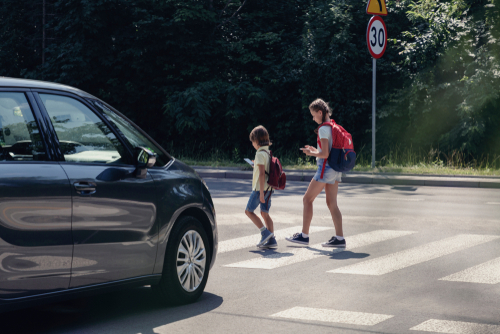
How Modified Comparative Negligence Works for Illinois Pedestrians
Illinois does not use an all-or-nothing approach to fault in personal injury cases. Instead, the state applies a modified comparative fault system governed by 735 ILCS 5/2-1116. Under this statute, which applies to “all actions on account of bodily injury or death or physical damage to property, based on negligence,” your contributory fault is compared against the fault of all parties who proximately caused your injury. If a jury or insurance adjuster determines you were 50% or less at fault, you may still collect damages, but your award will be reduced proportionally.
Here is a practical example. Suppose you were crossing a street in Elmwood Park outside a marked crosswalk and a speeding driver struck you, causing $100,000 in medical bills and lost wages. If the trier of fact assigns you 30% of the blame and the driver 70%, your recoverable damages would be reduced by 30%, leaving you with $70,000. However, if you were found 51% or more at fault, you would recover nothing. Over 30 states, including Illinois, use some form of modified comparative negligence, making this the most common approach nationwide.
💡 Pro Tip: Keep all medical records, police reports, and photographs from the scene of your accident. This documentation can be critical when establishing the other party’s percentage of fault and protecting your right to compensation.
What You Must Prove in an Elmwood Park Pedestrian Injury Claim
To recover pedestrian accident damages in Illinois, you generally need to establish four elements of negligence: duty, breach, causation, and damages. The at-fault driver (or other responsible party) must have owed you a legal duty of care, breached that duty through their actions or inactions, and that breach must have directly caused the injuries for which you are seeking compensation.
Duty and Breach
Every motorist in Illinois owes a duty of reasonable care to pedestrians sharing the road. A breach can include distracted driving, running a red light, failing to yield at a crosswalk, or speeding through a residential area in Elmwood Park. Identifying the specific breach is a key step in building a pedestrian injury claim.
Causation and Damages
You must also demonstrate a direct connection between the driver’s breach and your injuries. This means showing that but for the driver’s negligent conduct, you would not have been harmed. Damages in pedestrian cases often include medical expenses, rehabilitation costs, lost income, pain and suffering, and in tragic cases, wrongful death losses. Courts may consider multiple potentially liable parties, including drivers, vehicle owners, municipalities responsible for road design, and property owners who created hazardous conditions.
💡 Pro Tip: Do not give a recorded statement to the other party’s insurance company before consulting an attorney. Adjusters may try to use your own words to inflate your percentage of fault and reduce or eliminate your compensation.
The 51% Bar Rule: Where the Line Falls for Pedestrian Compensation
The critical threshold in Illinois is 50%. Under 735 ILCS 5/2-1116, a plaintiff is barred from recovering damages if the trier of fact finds that their contributory fault is more than 50% of the proximate cause of the injury. This is sometimes called the “51% bar rule” because a plaintiff at 51% fault or higher recovers nothing. The statute was recently updated, with the current version effective December 20, 2024 (P.A. 103-1053).
The table below illustrates how fault percentage affects a hypothetical $100,000 pedestrian accident claim:
| Your Fault % | Driver’s Fault % | Damages Awarded | Recovery |
|---|---|---|---|
| 10% | 90% | $100,000 | $90,000 |
| 25% | 75% | $100,000 | $75,000 |
| 50% | 50% | $100,000 | $50,000 |
| 51% | 49% | $100,000 | $0 |
This system contrasts sharply with the old contributory negligence rule, which most states have abandoned. Under contributory negligence, even 1% of fault on the pedestrian’s part would completely bar recovery. Illinois does not follow that harsh approach, giving injured pedestrians a meaningful opportunity to seek compensation even when their actions played a role in the accident.
💡 Pro Tip: Insurance companies frequently argue that a pedestrian was more than 50% at fault specifically to avoid paying a claim. Having an attorney review the evidence early can help counter inflated fault allegations before they take hold.
Statute of Limitations: Filing Deadlines You Cannot Afford to Miss
Time limits apply to every pedestrian accident claim in Illinois, and missing them can permanently destroy your right to recover. Under 735 ILCS 5/13-202, the general statute of limitations for personal injury claims is two years from the date of injury. This deadline applies to most Elmwood Park pedestrian accident cases involving private drivers or other non-governmental parties.
Claims Against Local Government Entities
When a local public entity or its employee is the defendant, the timeline shrinks dramatically. Under 745 ILCS 10/8-101, the statute of limitations for claims against a local public entity or any of its employees is only one year. In addition, most claims require written notice served on the public entity within that one-year period containing specific information about the accident, and failure to provide this notice is generally fatal to the claim. This shorter deadline could apply if, for example, a village vehicle struck you or a dangerous road condition maintained by a municipality contributed to your accident.
- Two-year deadline: Personal injury claims against private parties under 735 ILCS 5/13-202
- One-year deadline: Claims against local public entities or their employees under 745 ILCS 10/8-101
Courts generally interpret tolling exceptions and deadline extensions narrowly. Do not assume that a discovery rule or other tolling provision will automatically extend your filing window. Consulting an attorney promptly helps ensure you preserve all potential claims.
💡 Pro Tip: Mark your calendar with both the one-year and two-year deadlines immediately after an accident. If there is any possibility that a government entity is involved, treat the one-year deadline as your primary cutoff.
How a Pedestrian Accident Lawyer in Chicago, IL Can Strengthen Your Claim
Navigating comparative fault disputes and strict filing deadlines is difficult without legal guidance. A pedestrian accident lawyer in Chicago, IL with experience in these cases can investigate the collision, gather surveillance footage, obtain accident reconstruction analysis, and negotiate with insurers who may attempt to assign you an unfairly high percentage of fault. For Elmwood Park residents, working with a local attorney means having someone familiar with the intersections, traffic patterns, and municipal entities in the area.
Building a strong case often involves identifying all potentially liable parties. Beyond the driver who struck you, liability may extend to vehicle owners, employers of commercial drivers, property owners who allowed hazardous sidewalk conditions, or municipalities that failed to maintain safe roadways. Each additional liable party broadens the pool of available insurance coverage and can improve your chances of full compensation. You can read more about pedestrian accident claims to understand how these cases are typically handled.
💡 Pro Tip: Write down everything you remember about the accident as soon as possible, including weather, lighting, traffic signals, and the driver’s behavior. Witness memories fade and details become harder to verify over time.
Frequently Asked Questions
1. Can I still file a claim if I was jaywalking when a car hit me in Elmwood Park?
Yes, in many cases. Jaywalking may contribute to your percentage of fault, but it does not automatically bar your claim. Under Illinois’s modified comparative fault system (735 ILCS 5/2-1116), you can recover reduced damages as long as your fault does not exceed 50%. The specific facts, including the driver’s speed and attentiveness, will determine how fault is divided.
2. How long do I have to file a pedestrian injury lawsuit in Illinois?
The general deadline is two years under 735 ILCS 5/13-202. However, if your claim involves a local government entity or its employee, you may have only one year under 745 ILCS 10/8-101, and you may also need to serve written notice on the entity within that period. It is best to consult an attorney well before any deadline approaches.
3. What happens if I am found exactly 50% at fault for my pedestrian accident?
You may still recover damages, but they will be reduced by half. Under 735 ILCS 5/2-1116, the bar applies only when the plaintiff’s fault exceeds 50%. At exactly 50%, recovery remains available, though your award will be cut by your proportionate share of fault.
4. Who decides what percentage of fault I bear in a pedestrian accident case?
The trier of fact, typically a jury in a trial or an adjuster during settlement negotiations, assigns fault percentages. Your contributory fault is compared with the fault of all tortfeasors who proximately caused the injury. Evidence such as traffic camera footage, witness testimony, police reports, and accident reconstruction findings all influence this determination.
5. Can I recover compensation if the driver’s insurance company says the accident was mostly my fault?
An insurance company’s initial assessment is not the final word. Insurers often attempt to inflate the pedestrian’s fault to minimize payouts. An Elmwood Park Illinois injury lawyer can challenge these determinations by presenting independent evidence, consulting with accident reconstruction professionals, and negotiating from a position of strength. Explore our legal resources for more information on protecting your rights after an accident.
Protecting Your Right to Compensation After an Elmwood Park Pedestrian Accident
Being partly at fault for a pedestrian accident in Elmwood Park does not mean you forfeit your right to compensation. Illinois’s modified comparative negligence framework under 735 ILCS 5/2-1116 allows injured pedestrians to recover damages reduced by their share of responsibility, provided that share does not exceed 50%. The key is acting quickly, preserving evidence, and understanding the strict filing deadlines that govern these claims.
If you were injured as a pedestrian and have questions about fault or your right to recover, Lawyer Furqan is ready to help. Call 847.800.8978 or contact us today to schedule a consultation and take the first step toward protecting your claim.